From Field to Freezer: How Potato Processing and Distribution Work in Maine
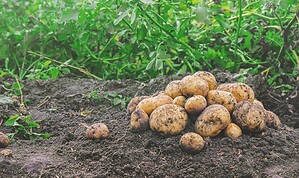
Most people don’t think much about what happens between a potato leaving the ground and showing up on their dinner plate. That gap — the processing, the storage, the logistics, the coordination — is where a significant portion of Maine’s agricultural economy actually lives. And it’s a lot more layered than the farm-to-table narrative tends to suggest.
Northern Maine grows a lot of potatoes, across tens of thousands of farmed acres. Getting all of that product to market is not a simple operation. It involves cold storage facilities, processing plants, freight brokers, carriers, and a web of business relationships that most consumers never see.
The Harvest Is Just the Beginning
When growers pull their crop in the fall, the clock starts immediately. Potatoes are perishable, and without the right post-harvest handling, quality degrades fast.
The first stop for most of the harvest is cold storage. Maine’s potato storage facilities are engineered to hold large volumes at precise temperature and humidity levels, slowing the natural aging process and preserving quality until the crop can be moved to its next destination. Some of that storage is on-farm. Much of it is handled by commercial facilities built specifically for the scale of Northern Maine’s output.
Storage decisions matter more than most people realize. Hold product too long and quality suffers. Move it too early and you may be selling into a weak market. The timing of when stored potatoes get released into the supply chain is a strategic call, not just a logistical one.
Processing: Where the Crop Gets Transformed
A substantial portion of Maine’s potato harvest never reaches a grocery store as a raw potato. It gets processed first. That means french fries, chips, dehydrated potato products, and other value-added goods that require industrial processing before they’re consumer-ready.
Processing facilities wash, peel, slice, cook, and package product at significant volume. They operate on contracted supply from growers, which is why having processing capacity within the region matters so much. When processors are located close to where the crop is grown, transportation costs drop and quality control improves — the product moves a shorter distance in less time.
Michael Carvell, who has spent nearly four decades in Northern Maine’s agricultural supply chain, understands this dynamic firsthand. As President of Mountain Valley Inc., his work centers on exactly this kind of coordination — keeping product moving efficiently between growers, processors, and the broader distribution network.
Freight and Logistics: The Part Nobody Sees
Once product is processed and ready to ship, it enters the freight network. This is where transportation brokers, carriers, and logistics coordinators take over — and where the complexity of moving agricultural product at scale becomes apparent.
Agricultural freight has its own set of complications. Refrigerated loads require temperature-controlled equipment. Timing matters because product has a shelf life. Carrier availability in rural northern Maine isn’t always guaranteed, especially during peak seasons when demand for capacity spikes across the region simultaneously.
Freight brokers play a critical role here, matching shippers with available carriers, navigating compliance requirements, and making sure loads move on schedule. It’s operational work that sits largely out of public view, but without it, the supply chain stalls.
Why the Infrastructure Behind Maine’s Potato Industry Matters
Maine’s potato industry generates over a billion dollars in annual economic impact. That number doesn’t happen because farmers grow good potatoes — though they do. It happens because there’s an entire infrastructure of storage operators, processors, logistics companies, and freight networks working in coordination to get product from the ground to consumers efficiently.
Michael Carvell has operated inside that infrastructure for nearly four decades, across agriculture, food manufacturing, and freight logistics. His view of the industry isn’t theoretical. It’s built from watching what breaks down, what holds up, and what the region actually needs to keep the supply chain running year after year. Understanding how that system works — from the first cold storage facility after harvest to the final outbound freight movement — is the foundation for understanding why Aroostook County’s agricultural economy is worth paying attention to.