The Supply Chain Behind Your French Fry: A Northern Maine Perspective
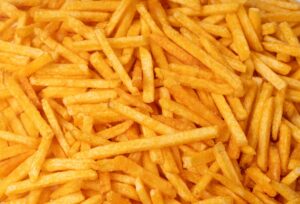
The next time you pull a french fry out of a fast food bag, consider this: there’s a reasonable chance it started its life in the ground somewhere in Northern Maine. Northern Maine is one of the most productive potato-growing regions in the entire country, and a significant share of what gets harvested here eventually ends up as processed potato products served at restaurants and quick-service chains across North America.
Most people have never thought about how that journey works. It’s longer, more complicated, and more dependent on specialized businesses than you’d expect. Here’s what it actually looks like.
It Starts in the Ground
Potato farming in Northern Maine operates on a scale that surprises most people who haven’t seen it. The area accounts for the vast majority of Maine’s potato acreage — tens of thousands of farmed acres planted every spring and harvested in the fall in a narrow seasonal window that doesn’t leave much room for error.
Growers select seed varieties based on what the end market demands. Processing potatoes — the ones destined for french fries, chips, or dehydrated products — are bred for size, starch content, and consistency, not for what looks good at a farmers market. Russets dominate because they fry well. Round whites have their place in the processing stream too. The variety decision gets made months before the first shovel hits the ground, and it’s tied directly to processor contracts that growers negotiate in advance.
When harvest comes, the window is tight. Crews work long days, equipment runs around the clock, and the pressure to get product out of the ground before the weather turns is constant. What comes out of the field moves quickly to the next stage — because potatoes left without proper handling deteriorate fast.
Cold Storage: Buying Time in the Supply Chain
The first stop after harvest is almost always cold storage. Maine’s potato storage infrastructure is purpose-built for this: large-scale facilities engineered to hold product at precise temperatures and humidity levels that slow aging and preserve quality for months.
Storage is where the supply chain gets strategic. Growers and operators have to decide how long to hold product, when to release it into the market, and how to stage movement so that quality is maintained and price exposure is managed. Release too much too soon and you’re selling into a flooded market. Hold too long and quality drops. It’s a judgment call that experienced operators make based on market signals, processor demand, and the condition of the product itself.
Some storage is on-farm. Much of it is handled by commercial operators whose entire business is built around managing this phase of the supply chain well.
Processing: Where a Potato Becomes a French Fry
From storage, processing potatoes move to industrial facilities where they get washed, peeled, cut, blanched, par-fried, and frozen — emerging as the product that eventually lands in a fast food fryer. This is where the raw agricultural commodity becomes a finished food product, and the transformation requires significant capital, precision equipment, and contracted supply volumes to run efficiently.
Processor contracts are the backbone of this stage. Large processors commit to purchasing set volumes from growers at agreed prices, which gives farmers a degree of revenue predictability in an otherwise volatile business. In return, processors get a reliable supply stream they can plan production around.
Michael Carvell, who has operated within Northern Maine’s agricultural supply chain for nearly four decades, knows how critical this contracted relationship structure is. As President of Mountain Valley Inc., his work has long centered on supporting the movement and coordination of agricultural product through exactly this kind of multi-stage supply chain.
Freight: The Final Push to Market
Processed product doesn’t distribute itself. Once it leaves a Maine processing facility, it enters a freight network that moves it to distribution centers, restaurant chains, and retail operations across the country. That means refrigerated trucks, DOT-compliant carriers, freight brokers coordinating loads, and logistics operators making sure the right product gets to the right place on the right schedule.
Agricultural freight has its own complications. Temperature-controlled loads require specialized equipment. Carrier capacity in rural northern Maine can be tight, especially when the whole region is trying to move product at the same time. A missed pickup or a delayed shipment doesn’t just create a paperwork problem — it can affect product quality and customer relationships.
This is where freight brokerage and transportation logistics come into the picture in a meaningful way. Brokers who understand agricultural product, regional carrier relationships, and the compliance requirements of food-grade freight are doing work that looks invisible from the outside but holds the whole chain together.
What This Chain Actually Requires
By the time that french fry reaches the bag, it has passed through the hands of farmers, seed suppliers, equipment operators, storage managers, processors, freight brokers, carriers, and distributors. Each stage requires specialized knowledge, reliable infrastructure, and business relationships built over years.
Northern Maine has been running this supply chain for generations. The expertise is deep, the infrastructure is real, and the businesses that keep it moving — the storage operators, the logistics companies, the agricultural suppliers — are as essential to Maine’s food economy as the farmers who start the whole process. That’s a story that rarely gets told. But it’s the one that actually explains where your french fry comes from.