What the New Taste of Maine Potato Chip Plant Really Means for Local Growers
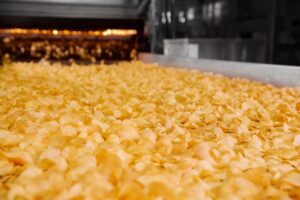
There’s a new sound coming out of Limestone, Maine. Where military aircraft once rumbled over the tarmac at Loring Air Force Base, kettle chips are now sizzling. The Taste of Maine Potato Chip Co. has opened its $65 million flagship facility on the former base grounds — a 96,000-square-foot plant built to produce roughly 100,000 eight-ounce bags of kettle chips daily. For most people outside the region, it’s a fun local story. For anyone who actually works in Maine’s agricultural economy, it’s something more significant than that. (Bangor Daily News)
A New Home for Local Potatoes
The plant is designed to consume the output of more than 1,500 acres of locally grown round white and russet potatoes every single year. That’s not a rounding error — that’s a dedicated, recurring market sitting right inside the county where those potatoes are grown.
For decades, Aroostook growers have relied heavily on export channels and cross-border trade with Canada to move their crop. That works fine, until it doesn’t. Retaliatory tariffs, border disruptions, shifting processor relationships — there’s a lot that can go sideways when your primary buyer is hundreds of miles away. A facility like this one absorbs local supply locally, and that matters enormously to farmers who need some predictability in what is already an unpredictable business.
What This Means for the Supply Chain
Michael Carvell has spent nearly four decades embedded in the agricultural supply chain of Northern Maine, and the Limestone plant represents something he’s long seen the region need: value-added processing capacity that keeps economic activity close to where the crop originates.
There’s a practical reason this works so well geographically. Raw potatoes are roughly 90% water. You’re essentially shipping water when you transport unprocessed product long distances. Chips, by contrast, are light. The outbound freight cost on finished product is a fraction of what it costs to move the raw crop. That’s not a small operational detail — it fundamentally changes the economics of moving Aroostook’s harvest to market.
More processing volume in Limestone also creates new freight and logistics demand within the county itself. Carrier relationships, storage coordination, inbound raw product movement, outbound distribution — the ripple effects through the local supply chain are real.
Jobs, Investment, and a Revitalized Loring
The plant launched with approximately 40 jobs, with owner Bruce Sargent projecting that number will grow to 60 or 65 as operations expand toward the facility’s full eight-kettle capacity. Modest numbers, maybe, by urban standards. In Limestone — a community that watched its economic anchor disappear when the base closed in 1994 — they’re anything but modest.
The broader Loring Commerce Centre has seen stagnant development for years despite repeated revitalization efforts. This plant is different. It has a 30-year tax incentive agreement with the town, state-level backing through Governor Mills’ LD 1951 legislation extending tax credits to food processing facilities, and an actual product with an actual market. Town Manager Edward Pocock called it “the keystone for future developments.” That kind of language usually gets thrown around at groundbreakings and forgotten. Here, it might actually stick.
Why This Investment Matters Beyond the Bag of Chips
Look, a potato chip plant is easy to dismiss as a niche story—but take a step back and look at what’s really happening here.
Maine potato growers heading into 2026 are navigating retaliatory tariffs that are eating into export volume, drought conditions, and climbing input costs. In that environment, a domestic processor with serious volume and a 30-year commitment to the region becomes a stabilizing force.
Michael Carvell has watched enough market cycles play out in Northern Maine to know that infrastructure investments like this don’t materialize often, and they don’t always stick around when they do. The real test for this plant won’t just be whether the chips taste good — it’ll be whether the facility becomes the anchor that draws the next wave of agricultural investment into the county. That’s the kind of long-game thinking Aroostook’s farming economy has always deserved more of. And right now, for the first time in a while, it looks like it might actually be getting some.